Yes — and for most patients, it's worth doing.
Travelling to another country for surgery is not the same as a routine hospital visit at home. The logistics are more complex, the environment is unfamiliar, and the recovery period involves days when having someone who knows you in the room matters more than any practical help they might offer.
India's visa system is set up for this. The process is straightforward. Here's how it works.
The e-Medical Attendant Visa
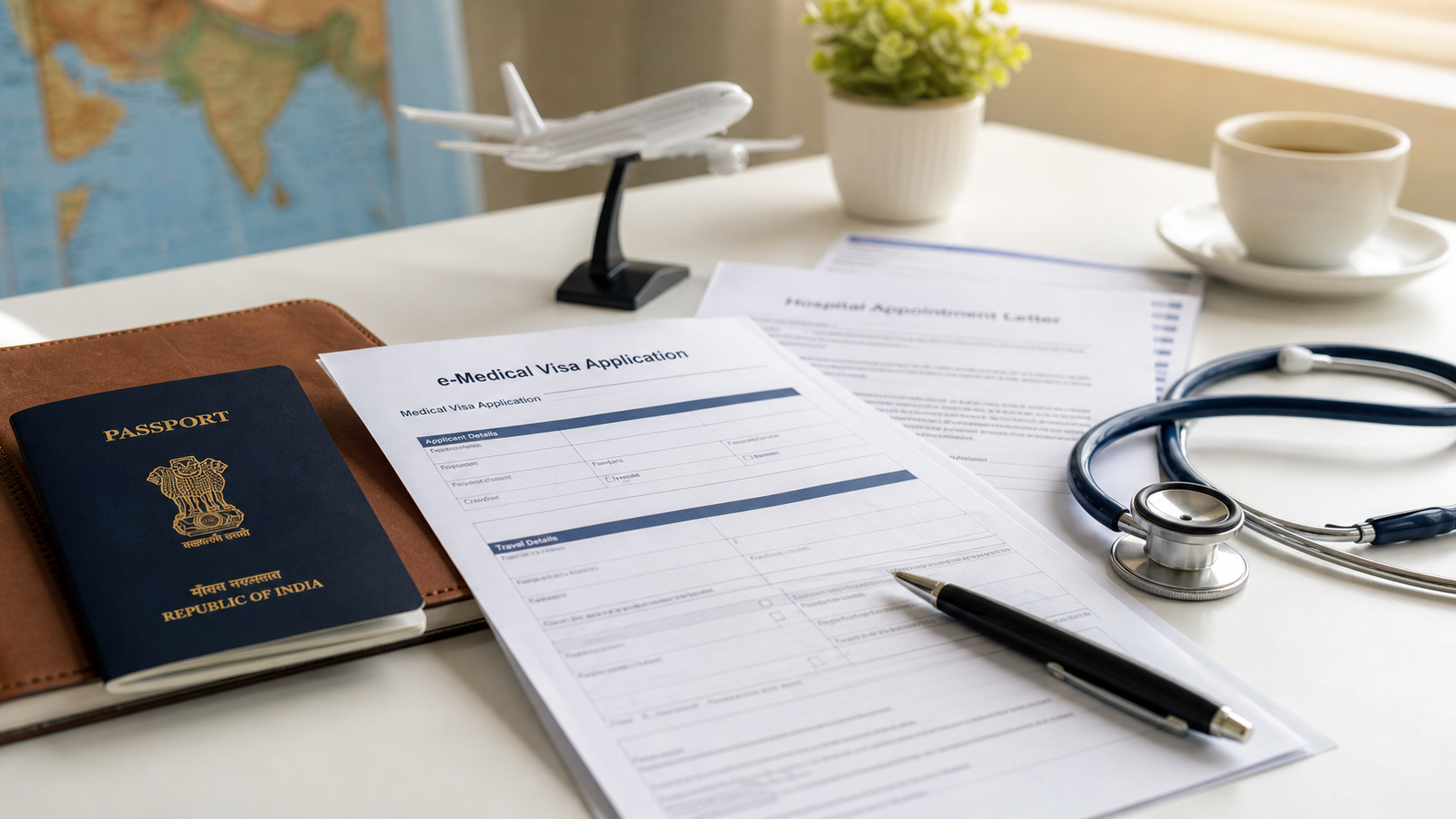
India issues a dedicated visa for companions travelling with medical patients — the e-Medical Attendant Visa (e-MATv). It's applied for online, processed at the same time as the patient's e-Medical Visa, and available to citizens of 160+ countries.
What it covers:
- Stay of up to 60 days per visit
- Triple entry — exit and re-enter India up to three times
- Available for up to two companions per patient
The companion doesn't need a tourist visa, a business visa, or any separate justification for their trip. The e-MATv exists specifically for this purpose.
Sano Healthcare and Tourism prepares both the patient visa and companion visa documentation simultaneously — full visa guide here →
What Your Companion Can Do
At the hospital:
Companions are welcomed at international patient departments. They can be present for consultations — which is genuinely useful, since two people retain more of what a doctor says than one — and can ask questions the patient might not think to ask in the moment.
During surgery itself, companions wait in dedicated family waiting areas. Staff at international patient departments are experienced with this and will keep them updated.
During the post-operative recovery phase in hospital, companions can typically be present during visiting hours, and at many hospitals are permitted to stay through the day. Overnight stays in the ward are hospital-specific — ask the international patient department in advance.
Outside the hospital:
Your companion's time is their own. Some use the waiting days to explore the city. Others prefer to stay close to the hospital. Sano's destinations team can suggest appropriate options based on the treatment city and how much flexibility exists in the schedule.
Accommodation — Together or Separate?
The practical answer is: together, where possible.
In the early days after surgery — particularly for procedures like joint replacement, cardiac surgery, or major abdominal work — you'll need help with things that seem small but aren't: getting to the bathroom, opening medication packaging, adjusting pillows, making a phone call when your hands aren't cooperating.
A companion staying in the same serviced apartment or hotel room is better placed to help with this than one staying across the street.
Sano arranges accommodation for patient and companion together as standard — same property, appropriate room configuration, close to the treating hospital. The companion's costs are transparent and separate from the surgical package. Read about accommodation arrangements →
What to Brief Your Companion On Before You Travel
Your companion will be more useful — and less anxious — if they arrive knowing a few things:
The treatment plan. What procedure is happening, roughly when, and what the recovery looks like week by week. They don't need medical detail, but they should know what to expect so they're not navigating uncertainty alone in a foreign city.
Your Sano coordinator's contact details. If something happens and you can't communicate, your companion needs to know who to call and how.
The hospital's visiting hours and family policies. These vary by hospital and ward. Confirm them with the international patient desk before you arrive.
The basics of getting around. Uber and Ola both operate in India's major cities. A working local SIM card makes this much easier — both for the patient and the companion.
What the companion visa allows. The e-MATv is valid for 60 days and covers the companion's entire stay, including any days spent exploring the city independently.
If More Than Two Family Members Want to Come
The e-Medical Attendant Visa covers up to two companions. If additional family members want to travel, they apply for a standard tourist e-visa — a separate process, but not complicated. They won't have the same hospital access as the designated companions on the e-MATv, but there's no restriction on them visiting.
Frequently Asked Questions
Can my companion attend consultations with me?
Yes, and it's encouraged. Having a second person in the room during clinical discussions means less reliance on memory and someone to ask the questions you didn't think of. Bring a notebook for both of you.
Will my companion be allowed in the ward after surgery?
Typically yes during visiting hours. Overnight ward stays for companions depend on the hospital's policy. Ask the international patient department specifically for your ward and procedure.
Does my companion need travel insurance?
Yes — independently from yours. Each person travelling needs their own policy covering medical emergencies during the stay. Read the travel insurance guide →
What if my companion needs to leave before I'm ready to fly home?
The e-MATv's triple-entry provision means a companion can leave India and return if needed. Flights and dates can be arranged independently from the patient's return journey. Sano can coordinate separate departure dates when needed.
Can my companion help communicate with the hospital if I'm not well enough?
Yes — and this is one of the most practical reasons to bring someone. Sano's multilingual team supports both patient and companion throughout the stay, but having a companion present who can relay information between you and the medical team is genuinely valuable.
Arrange the Companion Visa Alongside Yours
Start your joint case review with Sano →
WhatsApp: +91 85300 54299 — 24/7, in your language.
What to pack for your medical trip → | About Sano →
Sano Healthcare and Tourism arranges companion visas, accommodation, and hospital access for family members travelling with patients — handled alongside the patient's own arrangements from day one. Learn more →